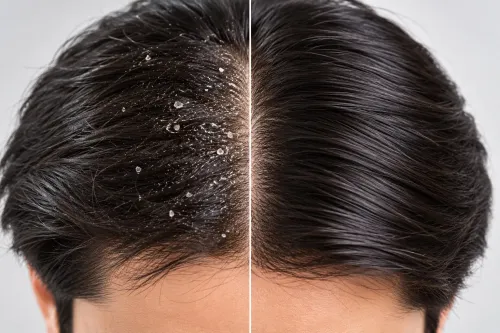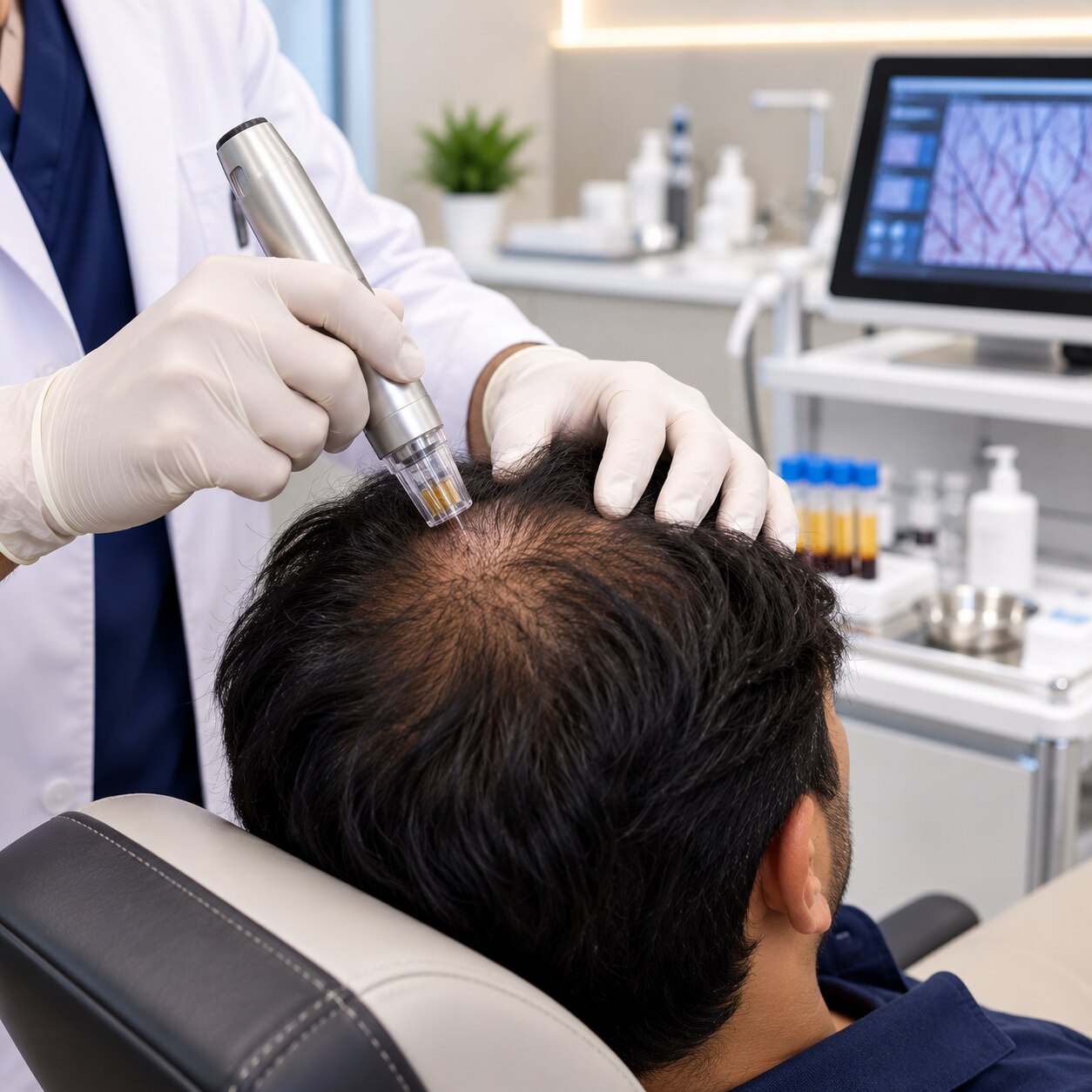
Persistent thinning can improve when treatment matches the cause, but a procedure marketed for “hair fall” cannot diagnose pattern loss, temporary shedding, inflammation or follicle damage. You will be able to identify the clues that matter, understand which treatments require medical supervision, and judge whether a proposed plan has a realistic chance of preserving or increasing density.
Key takeaways
- Pattern thinning often appears as a widening part, finer hairs, or reduced crown density.
- A proper assessment checks your scalp, shedding pattern, medical history, and possible triggers.
- Treatment results depend on the cause, hair-loss stage, and consistency of follow-up.
- Ask what a PRP or GFC course includes before choosing a thinning-hair plan.
What pattern of hair loss are you actually seeing?
Gradual pattern thinning usually shows a widening part, a thinner ponytail, reduced density at the crown, or a receding hairline. The hairs become finer over time rather than falling out in handfuls.
By contrast, shedding often starts suddenly and spreads across the scalp two to three months after fever, surgery, childbirth, rapid weight loss or severe stress.
| What you notice | More likely explanation | What it means before treatment |
|---|---|---|
| Widening part, crown thinning or receding hairline | Pattern hair loss | Treatment may preserve and thicken miniaturised hairs, but rarely restores all lost density |
| Hair on pillows, clothes or in the shower from the whole scalp | Telogen effluvium or medication-related shedding | Find the trigger before paying for a regrowth procedure |
| One or more smooth, sharply defined bald patches | Alopecia areata | Arrange medical assessment rather than treating it as ordinary thinning |
| Short, uneven hairs with split ends, especially near the hairline | Breakage from heat, chemicals, tight styles or friction | Reduce damage; regrowth treatment will not repair broken shafts |
Scalp redness, scale, pain, pus, burning or shiny areas without visible follicle openings need prompt assessment because scarring alopecia can permanently destroy follicles. The search phrase “can hair regrowth treatment help thinning hair in juhu” has no useful answer until the pattern, duration and cause are identified.
Photograph your parting and hairline in the same light each month; a single shower’s shedding cannot show progression.
What should a proper hair-loss assessment include?
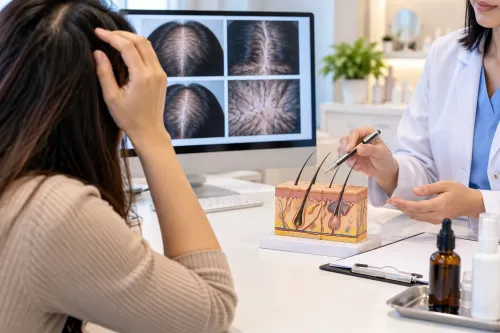
A proper assessment combines scalp examination, a detailed history and selective testing. The clinician should look for miniaturised hairs, widening part lines, recession, broken shafts, scaling, redness, pustules and shiny areas that could indicate scarring alopecia. Trichoscopy, close-up photographs and a gentle hair-pull test help document density and active shedding.
The history should ask about:
- Onset, speed and distribution of thinning
- Family history of pattern hair loss
- Fever, COVID-19, surgery, severe stress or weight loss in the previous two to four months
- New medicines, dose changes and supplements
- Menstrual irregularity, excess facial hair, pregnancy or menopause when relevant
- Tight hairstyles, chemical processing, itching, pain or scalp flaking
| Assessment | What it can reveal | When it matters |
|---|---|---|
| Scalp examination | Inflammation, scaling, scarring or infection | Pain, itching, redness or smooth shiny patches |
| Trichoscopy | Hair-calibre variation, miniaturisation, broken hairs or patch activity | Pattern thinning, alopecia areata or suspected scarring |
| Hair-pull test | Excess hairs entering the shedding phase | Sudden diffuse shedding |
| Photographs | Change in part width, hairline and density | Tracking progression over months |
Blood tests should follow clues, not a routine package. A clinician might order a complete blood count, ferritin or iron studies, thyroid-stimulating hormone, vitamin B12 or vitamin D when the history suggests deficiency or thyroid disease; hormone testing fits symptoms such as irregular periods or excess facial hair.
Tell the clinician about biotin because high doses can distort thyroid and cardiac test results. A hair regrowth consultation Juhu should explain which cause is suspected, what each test changes, and what happens if results are normal.
Which treatments can help, and what result should you expect?
The best option depends on the cause: treatment can improve pattern thinning, but it will not fix iron deficiency, traction or scarring alopecia by itself. Compare the main choices before paying for a package.
| Option | Likely benefit | Risks and effort | Permanence |
|---|---|---|---|
| Minoxidil | Slows pattern loss and may add modest density | Daily use; scalp irritation or unwanted facial hair | Benefits fade after stopping |
| Prescription medicines | Finasteride can slow male pattern loss; spironolactone may help selected women | Requires medical review; sexual, mood, blood-pressure or pregnancy risks | Maintained only while suitable treatment continues |
| Light therapy | Modest supportive benefit for some pattern loss | Regular sessions or device use; settings and evidence vary | Not permanent; FDA clearance does not guarantee a clinic’s result |
| Nutritional correction | Restores growth when iron, thyroid or another deficiency is driving loss | Supplements do nothing without a deficiency; excess doses can harm | Lasting if the cause stays corrected |
| Procedures | PRP, GFC or microneedling may add density as adjuncts | Multiple visits, discomfort and expense; results vary | Maintenance is usually needed |
| Transplantation | Moves resistant follicles into stable thinning areas | Surgery, cost, limited donor supply and possible scarring | Transplanted follicles are long-lasting, but untreated loss can continue |
Finasteride 1 mg is not suitable for everyone, and anyone pregnant or able to become pregnant must not handle crushed tablets. Correcting telogen effluvium after illness, childbirth, severe stress or weight loss often matters more than a procedure.
A hair regrowth treatment for hair loss in Mumbai should begin with diagnosis, photographs and a maintenance plan—not a promise of permanent regrowth.
What does a PRP or GFC treatment course involve?
PRP and GFC are injection-based add-ons, not cures for every cause of hair loss. A course usually involves several appointments spaced about 3–6 weeks apart, followed by maintenance sessions if you respond; the exact schedule depends on the preparation and your diagnosis. Each visit commonly takes 30–60 minutes.
Before treatment, arrive with a clean scalp and avoid oils, styling products and harsh chemical treatments. Tell the clinician about blood thinners, bleeding disorders, scalp infection and recent medicines. A numbing cream or local anaesthetic can reduce injection pain, but you may still feel brief pinches, pressure or burning.
- After the appointment, follow the clinic’s washing instructions; many protocols ask you to keep the scalp dry for several hours.
- Avoid vigorous exercise, swimming, alcohol and unnecessary scalp rubbing for the period advised.
- Expect temporary tenderness, redness, swelling or small injection bumps; these usually settle within one to three days.
- Seek medical advice for spreading redness, pus, fever or severe pain.
PRP uses concentrated platelets from your blood, while GFC uses prepared growth factors; neither reliably restores follicles that scarring has destroyed. Results vary because protocols, injection depth and outcome measures differ, and visible change takes months rather than days.
In pattern loss, these procedures usually thicken surviving miniaturised hairs rather than recreate full density, so ongoing treatment may be needed. A search for hair regrowth for thinning hair Juhu or hair thinning treatment near Juhu should lead to a diagnosis-led consultation, not a guaranteed package.
How can you choose a sensible thinning-hair treatment plan near Juhu?
A sensible hair thinning treatment near Juhu starts with a written assessment, not a package recommendation. Your consultation should record the pattern and duration of loss, examine the scalp, review medicines and recent illness, and note family history, hormonal symptoms and relevant expectations.
Ask the clinician to document:
- The working diagnosis and what findings support it, including photographs or trichoscopy images for comparison.
- Whether blood tests are justified, such as complete blood count, ferritin or thyroid-stimulating hormone, rather than ordering every vitamin panel automatically.
- The proposed treatment, session schedule, likely benefit, risks, downtime, total cost and maintenance.
- What happens if the plan fails, causes side effects or reveals patchy, inflamed or scarring hair loss.
| Option | What it can do | What to clarify |
|---|---|---|
| Minoxidil or prescription medicine | Preserve or thicken susceptible hairs while treatment continues | Pregnancy risk, blood pressure, drug interactions and ongoing use |
| PRP or GFC | Offer an injectable option for selected cases, with variable results | Number of sessions, discomfort, evidence, cost and review point |
| Hair transplantation | Redistribute donor follicles to areas of loss | Donor density, progression, untreated native hair and long-term maintenance |
A local clinic such as Inshine Aesthetics is useful for comparing options when it provides this level of documentation, explains alternatives rather than steering you to one procedure, and offers practical follow-up near home. Ask who makes the diagnosis and who manages complications before you commit.
Related services
Hair Treatment Effective Hair Regrowth Treatment Regain your confidence with our advanced hair regrowth solutions. View service → |
Hair Treatment Combat Hair Fall with Our Effective Treatments Regain your confidence with our advanced hair fall control solutions. View service → |
Frequently asked questions
What pattern of hair loss are you actually seeing?
Gradual pattern thinning shows as a widening part, thinner ponytail, reduced crown density, or receding hairline. The hairs become finer over time rather than falling out in handfuls.
What should a proper hair-loss assessment include?
A proper assessment should review your shedding pattern, scalp condition, medical history, medicines, nutrition, hormonal factors, and family history before recommending treatment.
Which treatments can help thinning hair, and what result should you expect?
The suitable treatment depends on the cause and stage of hair loss. Results usually require consistent treatment and realistic expectations about slowing loss, improving density, or supporting regrowth.
What does a PRP or GFC treatment course involve?
Ask how many sessions are planned, the interval between them, what preparation is required, expected downtime, aftercare, and how progress will be assessed.
How can you choose a sensible thinning-hair treatment plan near Juhu?
Choose a clinic that examines the cause of thinning, explains alternatives and limitations, provides a clear treatment schedule, and defines how results will be reviewed.
Related services
Hair Treatment PRP Treatment for Hair Regrowth Boost hair growth with Platelet-Rich Plasma (PRP) therapy. View service → |
Hair Treatment GFC Treatment for Hair Regrowth Stimulate hair growth with Growth Factor Concentrate (GFC) therapy. View service → |
Hair Treatment Revitalise your scalp & boost hair growth. What is Scalp Rejuvenation? - Non-invasive treatment to nourish scalp - Exfoliates & stimulates blood flow... View service → |
Hair Treatment Revitalise Your Skin & Hair with Korean Exosomes Experience the power of Korean Exosome Therapy for skin rejuvenation and hair regrowth. View service → |
Keywords