Daily shedding, a widening part and a thinner ponytail do not all mean the same thing, and each pattern calls for a different response. You will learn how to identify the likely type of loss, which assessments and tests matter, and how to compare treatment options before choosing a Juhu clinic.
Key takeaways
- Track shedding, hair density, scalp visibility, and photographs over time.
- Temporary shedding often follows illness, stress, weight loss, or medication changes.
- Seek assessment for patchy loss, scalp symptoms, or steadily widening part lines.
- Compare diagnosis, treatment duration, risks, costs, and follow-up before choosing.
What hairfall control benefits should you expect in practical terms?
Hairfall control benefits in juhu should mean measurable improvement, not a promise that every strand will stop falling. The useful outcomes are different:
- Less hair collected on your pillow, clothes, comb or shower drain.
- More existing follicles preserved before miniaturisation becomes advanced.
- A slower widening part, receding hairline or reduction in ponytail thickness.
- Better visible coverage, which usually takes months rather than days to assess.
Reduced shedding does not automatically mean new growth. A treatment can calm temporary shedding while density remains unchanged, whereas progressive thinning requires protecting vulnerable follicles over time. Standardised photographs, part-line checks and scalp examination make this distinction clearer than memory.
The benefit depends on finding the cause first. Diffuse shedding after fever, major stress, rapid weight loss or childbirth may settle after the trigger is addressed; patterned thinning needs a different plan. Patchy loss, eyebrow loss, scalp scaling, pain, redness, scarring or sudden heavy shedding deserves medical review before cosmetic procedures.
A sound consultation may use trichoscopy, a hair-pull test and targeted blood tests when your history suggests iron deficiency, thyroid disease, nutritional deficiency or hormonal problems. Do not assume supplements are harmless: high-dose biotin can disrupt laboratory results, and supplements help most when a deficiency is documented.
Reducing tight hairstyles, extensions, bleaching and repeated heat also protects follicles from preventable damage.
Is your hair shedding temporarily or thinning progressively?
Shedding that begins two to three months after a fever, surgery, childbirth, major stress or rapid weight loss often points to telogen effluvium. Hair usually thins evenly across the scalp, without a sharply defined bald patch. The trigger, shedding level and regrowth pattern need review rather than an assumption that the loss is permanent.
Progressive loss changes the shape of your hair. Check for these clues:
- A widening part or more visible scalp at the crown
- Receding temples or a smaller-looking front hairline
- A ponytail that feels thinner over several months
- Gradual miniaturisation, with shorter, finer hairs replacing stronger strands
- A smooth patch, broken hairs, eyebrow loss or loss of body hair
- Itch, scale, pain, pustules or shiny skin where follicles seem absent
A sudden increase in shedding can still need prompt assessment if it follows no clear trigger, forms patches or includes scalp inflammation. Tight braids, extensions, frequent heat or chemical treatments can cause traction and breakage; ongoing tension can permanently destroy follicles.
The practical hairfall control benefits in Juhu depend on identifying that difference: reducing shedding is not the same as restoring density or stopping patterned progression. During a hair fall treatment Juhu consultation, discuss onset, family history, illness, weight change, medicines, menstrual or hormonal changes, diet and scalp symptoms.
Standardised photographs and a review after several months provide a more reliable comparison than daily counting.
Which causes and symptoms need a medical hair-loss assessment?
See a medical clinician before cosmetic treatment if hair loss is sudden, patchy, painful, scarring, or accompanied by eyebrow or body-hair loss. These signs can point to alopecia areata, infection, inflammatory disease, or scarring alopecia rather than ordinary shedding.
If you are searching for hair fall treatment juhu, take these details to the consultation:
- When the loss began, whether shedding increased suddenly, and whether illness, fever, surgery, childbirth, major stress, rapid weight loss, or a new medicine preceded it
- Family history, diet, menstrual changes, pregnancy plans, thyroid symptoms, and known iron or nutritional deficiency
- Itching, heavy scale, redness, pustules, pain, broken hairs, or shiny areas where scalp skin has replaced follicles
- A widening part, receding temples, smaller ponytail, or sharply defined bald patches
| Pattern or history | What it may suggest | What to discuss |
|---|---|---|
| Diffuse shedding months after a trigger | Telogen effluvium | Recent illness, stress, weight loss, childbirth, medicines |
| Gradual part widening or temple recession | Androgenetic alopecia | Family history and progressive miniaturisation |
| Round smooth patches or eyebrow loss | Alopecia areata | Prompt medical assessment |
| Scale, pustules, pain, or scarring | Dermatitis, infection, or inflammatory alopecia | Examination before scalp procedures |
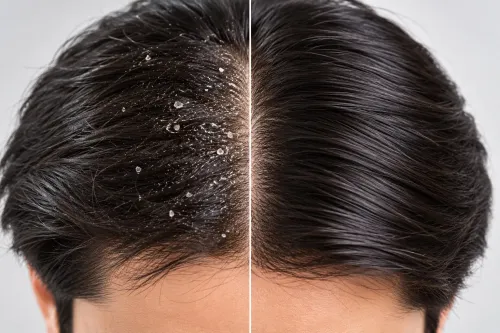
The same checks apply to scalp treatment for hair fall juhu: anti-dandruff products do not treat every cause. Ask whether examination, hair-pull testing, trichoscopy, standardised photographs, or targeted tests for iron, thyroid and nutritional problems are appropriate before starting.
What should a proper hair-loss assessment and treatment comparison include?
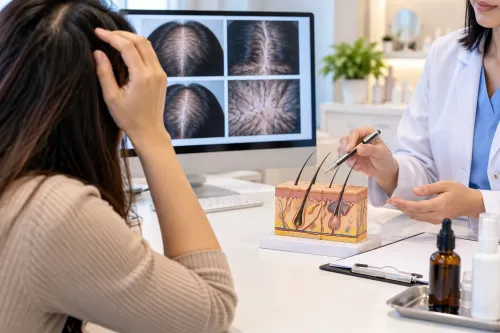
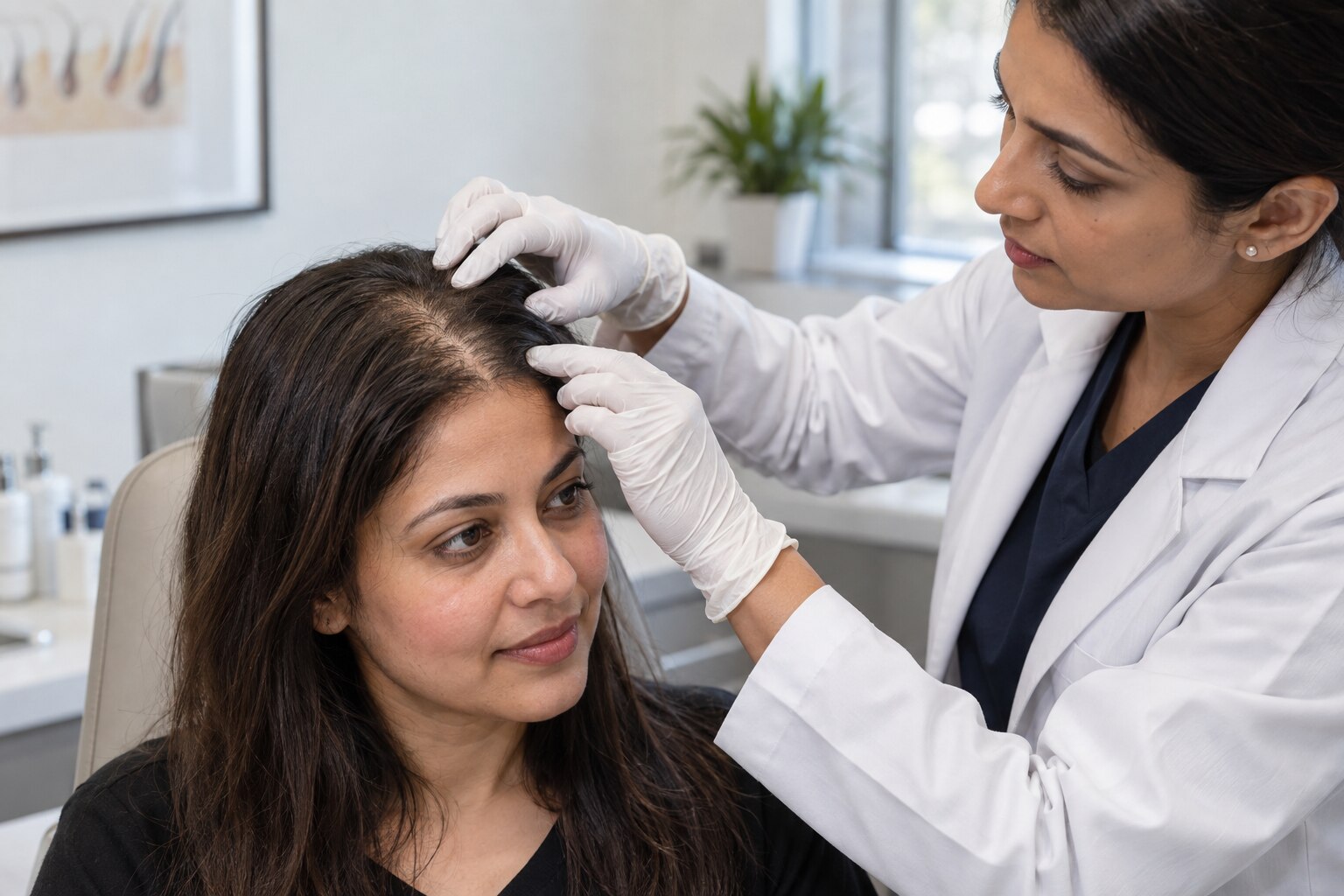
A useful comparison starts with diagnosis, not a package name. A hair loss control clinic Juhu assessment should include scalp inspection, a hair-pull test, and dermoscopy or trichoscopy to identify miniaturisation, broken hairs, inflammation, patches or scarring. Ask for standardised photographs so later change is measurable.
Blood tests should follow your history and examination, not a blanket panel. A clinician may consider a complete blood count and ferritin for iron deficiency, TSH for thyroid disease, and B12 or vitamin D when diet or symptoms suggest deficiency. Irregular periods, acne or excess facial hair may justify androgen testing.
- Compare treatments by diagnosis, expected time to benefit, risks, maintenance and evidence.
- Tell the clinician about pregnancy potential before minoxidil or prescription medicines; spironolactone is unsuitable during pregnancy.
- Choose scalp treatment for hair fall Juhu when dandruff, itch, scale or inflammation contributes to shedding. Anti-dandruff treatment does not regrow hair in every cause.
- Seek prompt review for sudden patchy loss, pustules, pain, eyebrow loss or scarring.
| Option | What it means | When it applies |
|---|---|---|
| General programme | Diagnosis, photos, monitoring and combined care | Unclear or mixed causes |
| Minoxidil | Topical or clinician-supervised oral growth support | Patterned thinning |
| Prescription medicines | Finasteride or spironolactone with medical supervision | Selected hormone-related or patterned loss |
| Scalp care | Treats dermatitis or infection | Inflamed, itchy or scaly scalp |
| PRP | Platelet concentrate injections; protocol and evidence vary | Adjunct for selected patterned loss |
| GFC | Growth-factor concentrate injections; evidence remains less established | Discuss only after diagnosis and informed consent |
How should you choose and monitor a hair-loss plan in Juhu?
Choose a plan by diagnosis and measurable follow-up, not by the number of procedures in a package. A hair loss control clinic Juhu consultation should explain whether your pattern fits telogen effluvium, androgenetic alopecia, traction, scalp disease or another condition before recommending treatment.
Ask these questions before paying:
- What examination will you perform: scalp examination, hair-pull test, dermoscopy or trichoscopy?
- Which blood tests does my history justify, such as ferritin, thyroid testing, vitamin B12 or hormone tests?
- What exactly happens during each procedure, who performs it, and what are the pain, downtime, infection and shedding risks?
- Is the plan treating the cause, supporting existing follicles, or only improving scalp comfort?
- Which costs cover consultation, tests, medicines, consumables, sessions and review visits?
At Inshine Aesthetics, ask for the same written details you would request from any hair fall treatment Juhu provider, including the proposed number of sessions and what happens if your diagnosis changes. Do not accept “guaranteed regrowth” as a progress measure.
| Plan type | What to verify | Proof of progress |
|---|---|---|
| Medical treatment | Dose, side effects and daily duration | Standardised photos and examination findings |
| PRP or GFC | Product preparation, sterility and session interval | Density or miniaturisation changes over months |
| Scalp treatment | The scalp condition being treated | Less itch, scale or inflammation, not automatic regrowth |
Set a review after several months, since visible growth does not appear within days. Seek prompt medical review for sudden heavy shedding, patchy loss, eyebrow or body-hair loss, pain, pustules or scarring.
Related services
Hair Treatment Combat Hair Fall with Our Effective Treatments Regain your confidence with our advanced hair fall control solutions. View service → |
Hair Treatment Effective Hair Regrowth Treatment Regain your confidence with our advanced hair regrowth solutions. View service → |
Frequently asked questions
What hairfall control benefits should you expect in practical terms?
Look for reduced shedding, improved scalp coverage, less visible widening at the part, and stable results measured through consistent photographs and follow-ups.
How can you tell whether hair shedding is temporary or progressive thinning?
Temporary shedding often follows an identifiable trigger and settles after the trigger resolves. Progressive thinning shows ongoing density loss, a widening part, receding hairline, or increasing scalp visibility.
Which causes and symptoms need a medical hair-loss assessment?
Arrange an assessment for sudden or patchy loss, eyebrow loss, scalp pain, itching, scaling, redness, scarring, or persistent shedding after illness, rapid weight loss, or medication changes.
What should a proper hair-loss assessment and treatment comparison include?
Compare the diagnosis, scalp examination, treatment options, expected timeline, side effects, contraindications, total cost, maintenance needs, and follow-up measurements.
How should you choose and monitor a hair-loss plan in Juhu?
Choose a clinic that documents your history and baseline photographs, explains alternatives, schedules reviews, and adjusts treatment using changes in shedding and hair density.
Related services
Hair Treatment Revitalise your scalp & boost hair growth. What is Scalp Rejuvenation? - Non-invasive treatment to nourish scalp - Exfoliates & stimulates blood flow... View service → |
Hair Treatment Treatment Say goodbye to dandruff & flaky scalp. Our Treatment: - Deep cleansing & medicated therapies - Scalp exfoliation & soothing treatments -... View service → |
Hair Treatment PRP Treatment for Hair Regrowth Boost hair growth with Platelet-Rich Plasma (PRP) therapy. View service → |
Hair Treatment GFC Treatment for Hair Regrowth Stimulate hair growth with Growth Factor Concentrate (GFC) therapy. View service → |
Keywords